
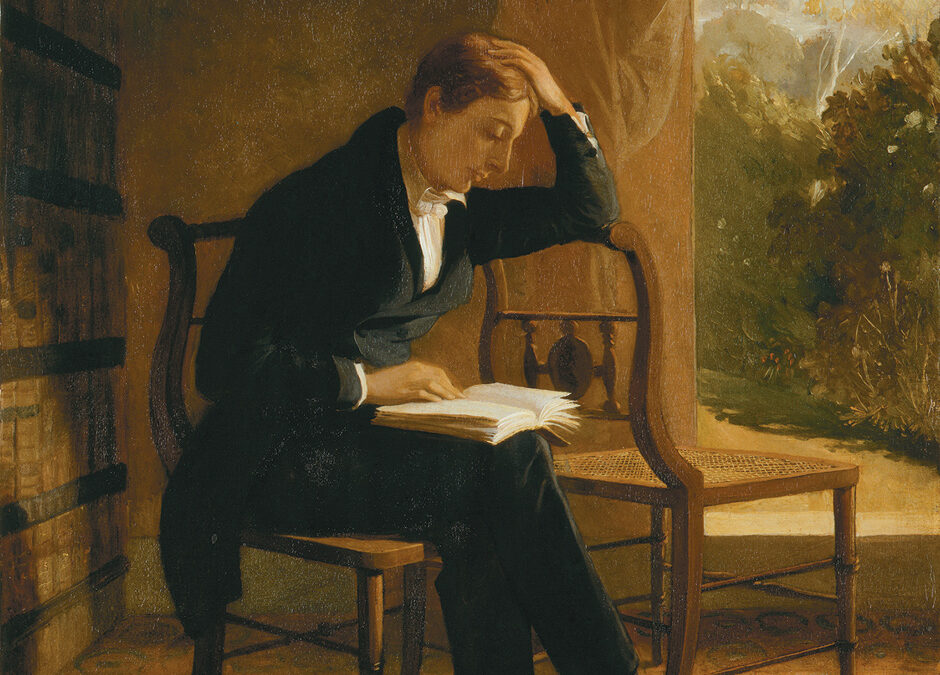
Rome, February 3, 1821
He arrived last September from England already pale, already carrying the news of himself in the color of his face. The rooms on the Spanish Steps are small. The English physician Joseph Severn has been with him through the worst of it. I am not close enough to be in the room. I watch from a distance that I have learned, over centuries, is the appropriate distance for what I am.
John Keats is twenty-five years old. He has written, in the past three years, poems that I will carry for as long as I carry anything. The odes especially. What he understands about beauty and its relationship to truth is something that most people take a lifetime to approach and never quite reach. He has reached it, and now the tuberculosis is taking the body that held the mind that reached it.
I have watched this before. Not this exactly, but the pattern: the very bright, burning at a temperature that does not sustain. Byron. Shelley. Mozart. Raphael at thirty-seven. The world produces these minds and then seems unable or unwilling to maintain the conditions that keep them alive.
He will not last the week. Severn’s letters to Keats’s friends in England are already beginning to read as eulogies that have not quite admitted what they are. I will be at the burial. I will come back to the grave. I have been doing this for too long, and I have not yet found a way to stop.