
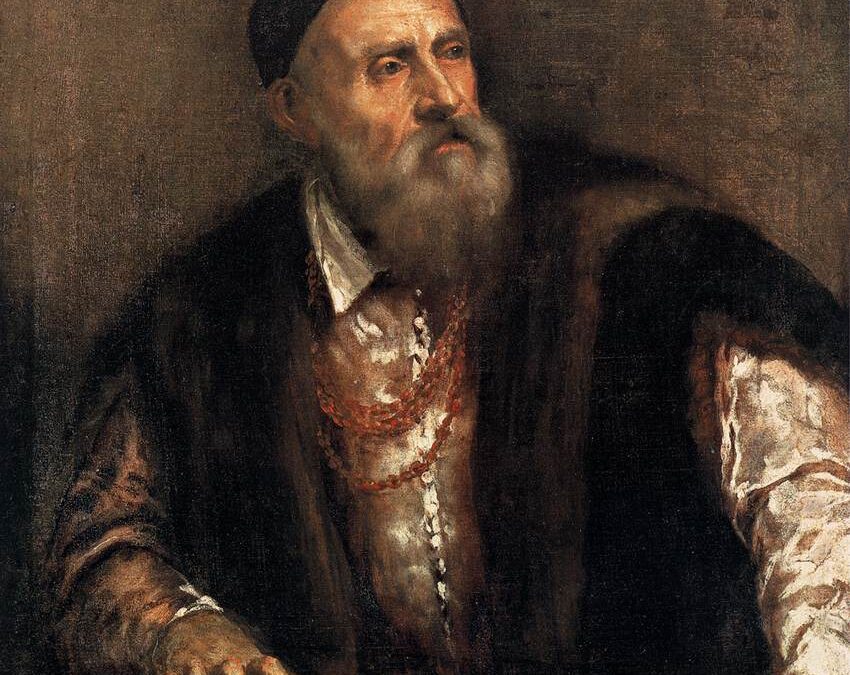
Venice, spring 1535
Titian Vecellio painted me this week. He has been after me for two years, since someone in the Venetian patronage circles mentioned that I was one of the more interesting faces in the city, which I took as a warning rather than a compliment. But I ran out of reasons to decline and so I sat for him three mornings running in a studio that smelled of linseed oil and the particular damp of Venice in spring.
He painted me under the name I have been using here for the past decade. He examined my face for a long time before the first brushstroke. He has been painting faces for forty years and knows what time does to them. What he was looking at, I think, is the thing that does not add up: a man who appears to be in his late sixties, silver-haired, weathered, but with something in the eyes that belongs to a different category entirely. Something that does not age at the rate the rest of the face ages.
He said, in a letter I have since obtained a copy of, that my eyes contained too many rooms. He could not paint what he saw there, so he painted what surrounds it: the silver hair, the weathered skin, the stillness of a man who has learned that stillness is the best available disguise. The portrait captures what is visible. What is visible is only part of what is there.
He lived to approximately ninety and died in a plague outbreak in Venice in 1576. I was in the city. I did not contract the plague. I have never contracted anything for very long.