
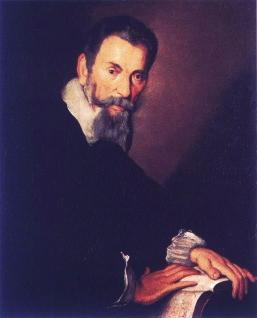
Venice, autumn 1614
Claudio Monteverdi has been at San Marco for three years now, and what he is doing in the basilica and in the private concert rooms of the Venetian nobility is something that deserves more recognition than Venice gives it, though Venice gives it considerable recognition. He is inventing, in real time, an emotional language for music that had not existed in this precision before.
The madrigals of his earlier books were already extraordinary. The Vespro della Beata Vergine, published four years ago, was something I encountered with the specific shock of hearing a form pushed further than it had been pushed before. But what he is doing now, in the proto-operatic work beginning to come out of his circle: this is new. The relationship between word and music, the way a phrase of text can be carried on a melodic line that does not merely illustrate the text but becomes its interior life: this was attempted before and not quite achieved. He is achieving it.
I have known music for a long time. I was in the Thomaskirche when Bach’s counterpoint stopped me cold. I will be in Prague when Don Giovanni is premiered and will not be able to move at the curtain. But those encounters are centuries forward from where I am standing now. Here, in this decade, in this city, it is Monteverdi who is doing the thing that cannot quite be done, and managing to do it.
I sat in the back of a small concert last week and held very still and let it move through me the way you let something move through you when you know it will not come again in the same form.