
Present Day, November 2026
I have watched death for five hundred and sixty-eight years. I have watched it arrive in war and in plague and in the ordinary wearing down of bodies by time. I have watched very talented people die young and ordinary people live into confused old age and I have watched the occasional person face death with a composure that made the watching almost bearable. But I have only once seen what Poe describes in Ligeia, and that once was not through the story. That once was something I witnessed directly, in a context I will not document here.
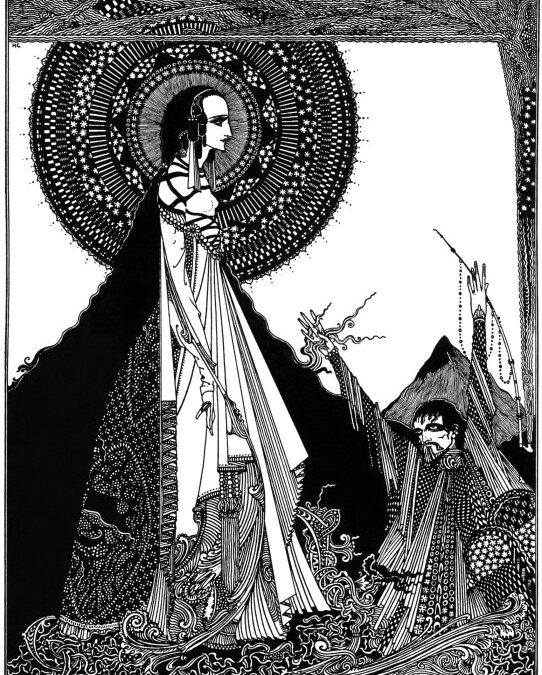
What Poe understood about Ligeia is that her will is the most powerful thing about her. Not her learning, though she is the most learned woman in the story. Not her love, though she loves completely. Her will. The refusal to accept what everyone around her insists is inevitable. She studies death the way a scholar studies a problem, looking for the mechanism that can be contested. She finds it. She tells her husband: the weak alone surrender to the conqueror worm. She is not weak. She is right.
The song is the heaviest thing on this album. E minor at 70 bpm, built slowly and enormously. I tell the story from the narrator’s point of view until the final verse, and then the perspective shifts: I have seen centuries turn to ash and water, I have watched the faithful beg and die alone, but only once have I seen death refused completely. That shift is the thing the song exists to deliver. It is also the most honest thing I have written in this collection. Only once. And it was not Poe’s story. It was something else entirely.