
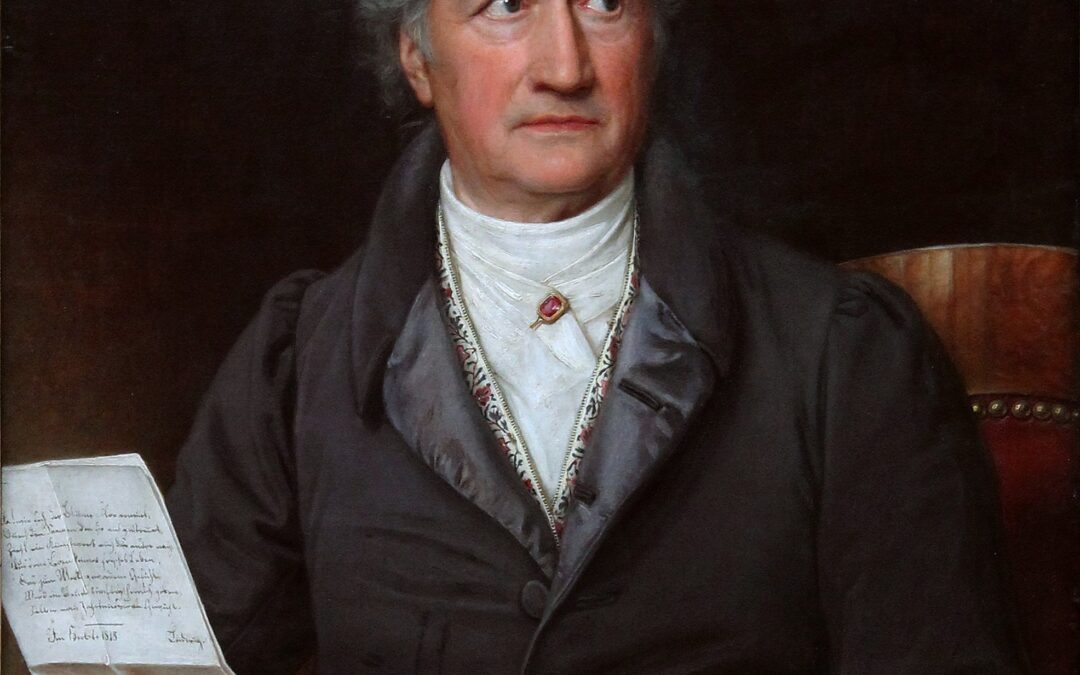
Weimar, autumn 1799
I was introduced to Johann Wolfgang von Goethe at a gathering at the Duchess Anna Amalia’s court. He is fifty years old and the most celebrated writer in the German language and the weight of that does not appear to have flattened him the way celebrity flattens most people. He is still building something. You can tell from the quality of his attention.
We spoke about Spinoza, about the relationship between scientific observation and poetic feeling, about whether those two modes of attention were fundamentally different or only superficially so. He argued they were the same act performed in different registers. I argued that the difference in register changes what you can see, and that the poetic register reaches certain things that the scientific one cannot. He listened carefully. He did not concede. He did not dismiss. He filed it.
He is in the middle of Faust and has been in the middle of it for decades. The first part will be published in four years. The second part will not come until he is eighty-three, the year he dies. He is carrying this thing across a lifetime, which is a kind of devotion I recognize, even if the timescale of my own projects has somewhat different dimensions.
He said, at the end of the evening, that I seemed like a man who had been many things before arriving at whatever I currently was. He was correct. He said it with admiration. That is also correct, from a certain angle.