
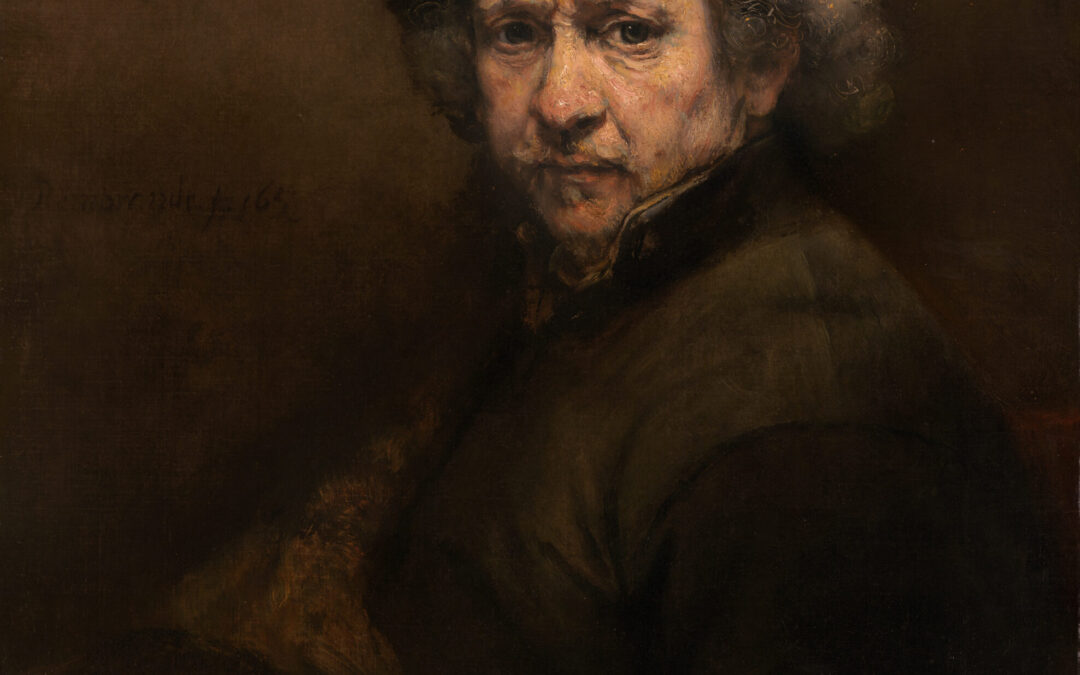
Amsterdam, October 4, 1669
Rembrandt van Rijn died this morning. He was sixty-three years old. He spent the last years of his life in financial ruin, the house sold, the collection dispersed, his son Titus dead at twenty-six two years ago, everything stripped away except the painting itself, which he continued with a steadiness that I found, at the times I was near him in those years, very close to a kind of faith.
I bought several of his later paintings through intermediaries. I still have them. They are not comfortable paintings. The late self-portraits especially: a man documenting his own face year by year, watching the flesh loosen, the eyes deepen, the evidence of time accumulate, and painting it without apology or evasion. A record kept for reasons that the keeper was, I suspect, not entirely sure of. Because to stop looking would be to concede something. Because the looking was itself a form of presence.
I have been in proximity to Rembrandt on and off for thirty-five years. We were not close friends. I was a figure at the edge of his world: a scholar, a collector, a strange man who appeared at the workshop on certain occasions and watched him work with an attention that he seemed, after the first few times, to find unremarkable. He saw me. He always saw what was in front of him. He did not say anything about what he saw.
Some people understand more than they choose to address. Rembrandt was one of those people. I find this, now that he is gone, a source of comfort I had not anticipated.