
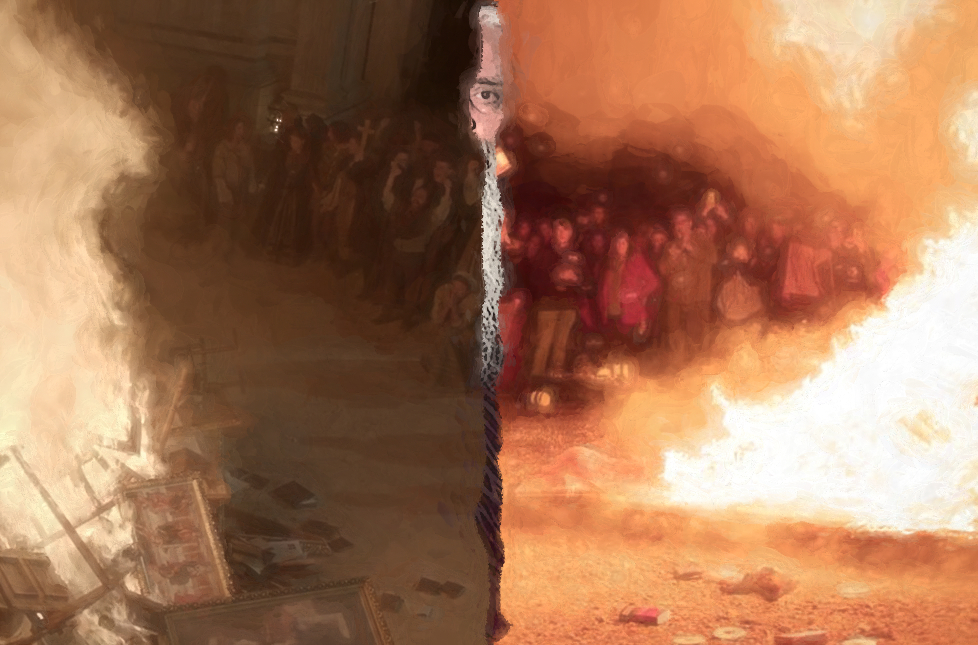
Florence, 1497
I was in Florence when Savonarola organized the Bonfire of the Vanities. I stood in the Piazza della Signoria and watched it burn. Mirrors. Books. Musical instruments. Paintings. Cosmetics. Games. Anything that could be construed as bringing pleasure to the body or engaging the mind in unauthorized directions. The beautiful things of a generation’s making, reduced to ash in an afternoon, in the name of purity.
Savonarola was not unintelligent. He understood something true about Florence: that the Medici patronage system had produced a culture organized around the pleasure and edification of a relatively small class of wealthy people, and that this culture had not distributed its benefits as widely as it might have. His diagnosis of the problem had genuine substance.
His solution was the bonfire. Destroy the beauty. Destroy the instruments of pleasure. Destroy the complexity. Simplify until what remains is legible to the angriest and most frightened and least educated member of the audience, and call the simplification purity.
I have watched this pattern operate in many subsequent contexts: the fanaticism that burns the beautiful first, that targets complexity as though complexity were itself the problem rather than a feature of actually engaging with the world as it is. The pattern is ancient. It has never produced what it promises to produce. It has always produced a specific kind of silence, in which the things that were burned are no longer available to anyone. Florence recovered. The things that burned did not.