
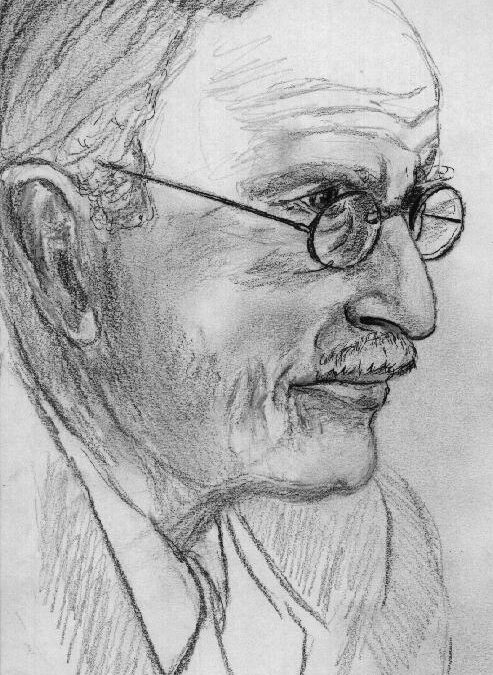
Zurich, March 1912
I was introduced to Carl Jung at a gathering of the Zurich Psychological Society under a false name. He is thirty-six years old, still in the orbit of Freud but beginning to move away from it in a direction that Freud will not follow. We spoke for perhaps forty minutes before I excused myself. Some conversations are best not continued.
He said something about the shadow self, about the parts of the psyche that consciousness refuses to own and that live beneath conscious identity like a weight that makes all movement more expensive than it appears. He said these refused parts do not disappear when refused. They accumulate. They become more concentrated with each refusal. The person who has spent a lifetime refusing their shadow carries something very dense and very dark by the end of it.
He was describing a psychological phenomenon. I understood him to be describing something else: the nature of what I carry, which is not merely memory but accumulated refusal, the weight of every loss I could not grieve, every wound I could not let close, every person I watched die who I could not die with. Preserved in the grey. Locked in at the turning. Not healed: accumulated.
I excused myself shortly afterward. I did not want Jung to keep looking in my direction with that particular quality of attention. He had found, through pure theoretical reasoning, a door that I had walked through physically in 1510. Some encounters are better held at a distance. I walked back to my hotel along the Limmat and sat with it for an hour before I could continue the day.