
Paris, June 1937
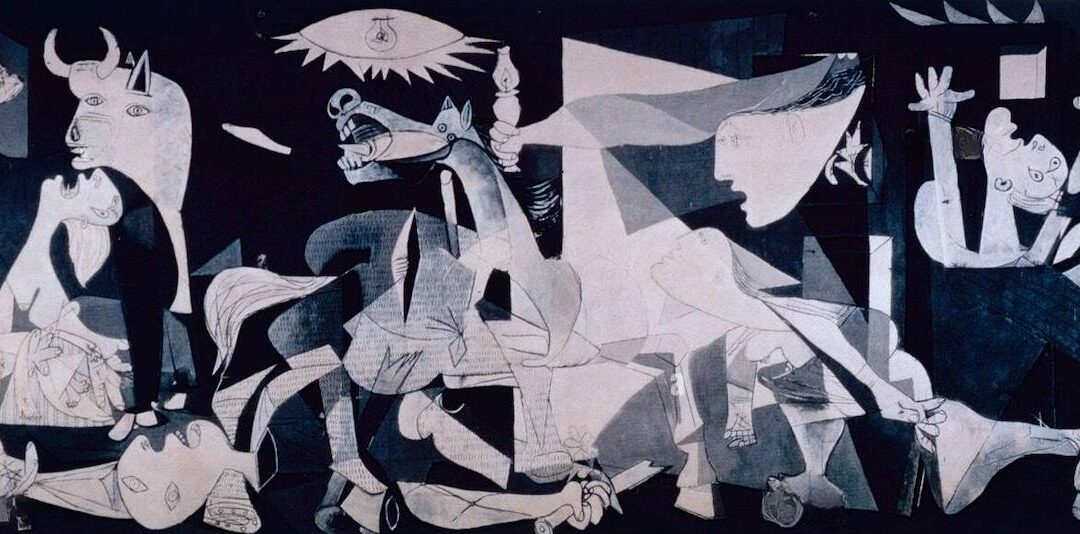
Guernica is hanging at the Spanish Pavilion of the International Exposition on the Champ de Mars. I stood in front of it for two hours today. I have been in enough wars to have personal reference points for what this painting documents.
Picasso has not painted what happened in Guernica. He has painted what it meant and what it cost. This is the distinction that separates useful art from documentary. The photograph shows you the event. This painting shows you the thing underneath the event that the photograph cannot reach: the scream, the animal terror, the geometry of suffering, the fact that bodies subjected to this kind of violence lose their coherent shape because coherent shape is a condition of ordinary life and this is its opposite.
I was in Berlin three years ago and watched the apparatus that produced this atrocity assembling itself with the unhurried confidence of machinery that knows it will not be stopped. I recognized every component from earlier centuries. The rallying. The scapegoating. The institutional blessing of violence. The crowd convinced it stands on the right side of history. I have seen every piece of this before. I have never seen it assembled at this scale or with this efficiency.
The painting knows this. I stood in front of it until the attendant asked me to leave. Then I walked along the Seine and thought about what it means to be a witness. What it has always meant. What it costs. What it produces, and whether production is enough.